Writing
Notes on the parts of a business nobody wrote down, and what it costs to leave them that way.
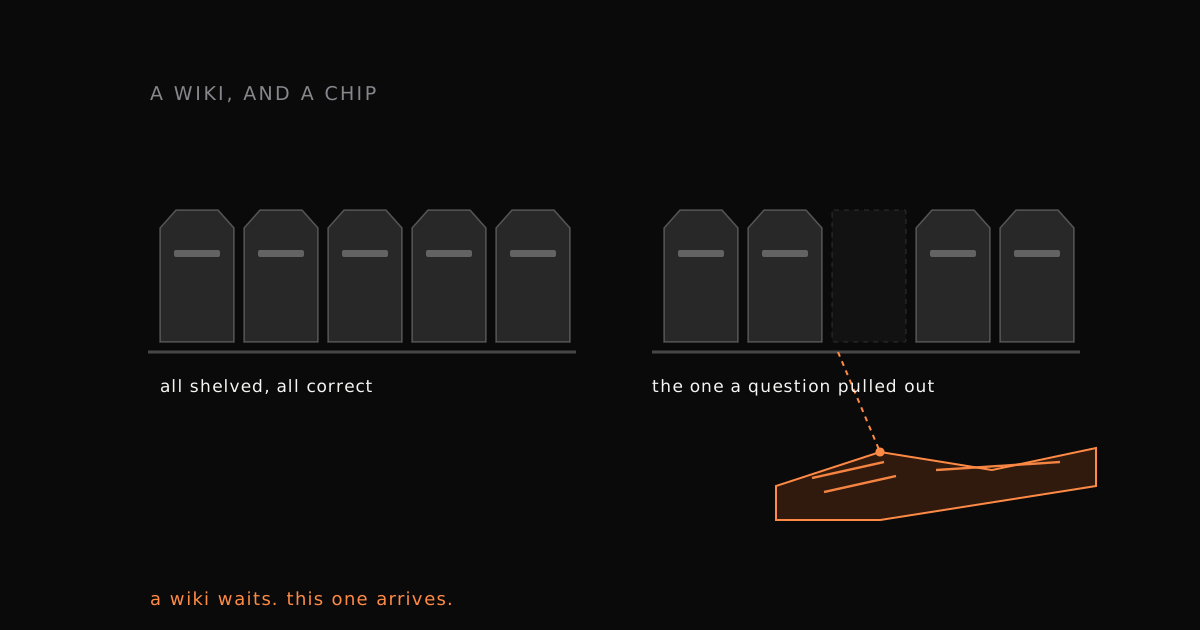
It's the fair question, and the answer is mostly no. Here's what a knowledge base does well, where it stops, and what has to sit on top of one for it to be worth the effort.
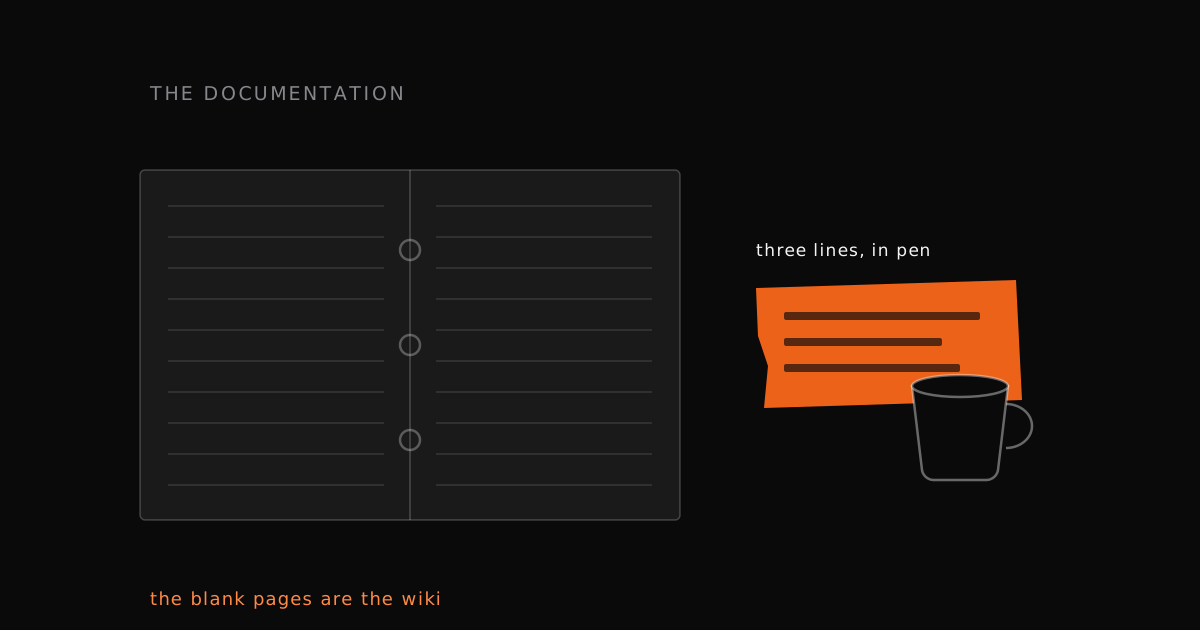
Onboarding documents teach the tasks. They almost never carry the reasoning behind them, and that gap is what actually slows a new hire down.
Every growing company builds one eventually. Most are abandoned within a year, not because nobody wrote anything down, but because writing it down was never the hard part.
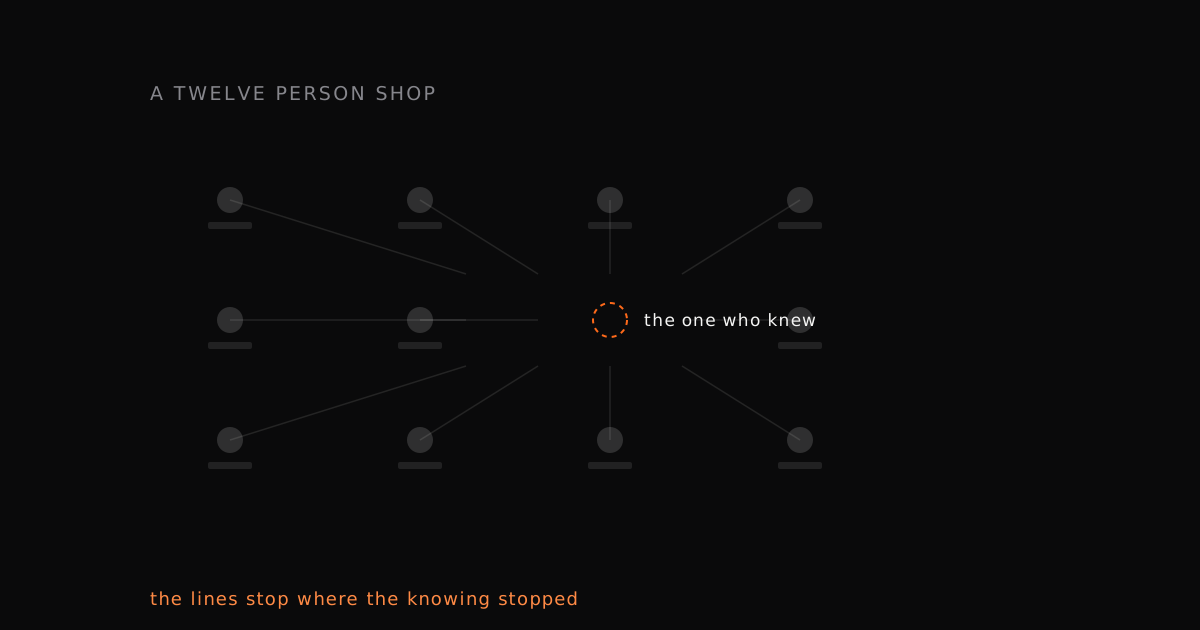
The hours a founder loses to answering things only they can answer never land on a calendar, so nobody counts them. Here's what it looks like when you can.
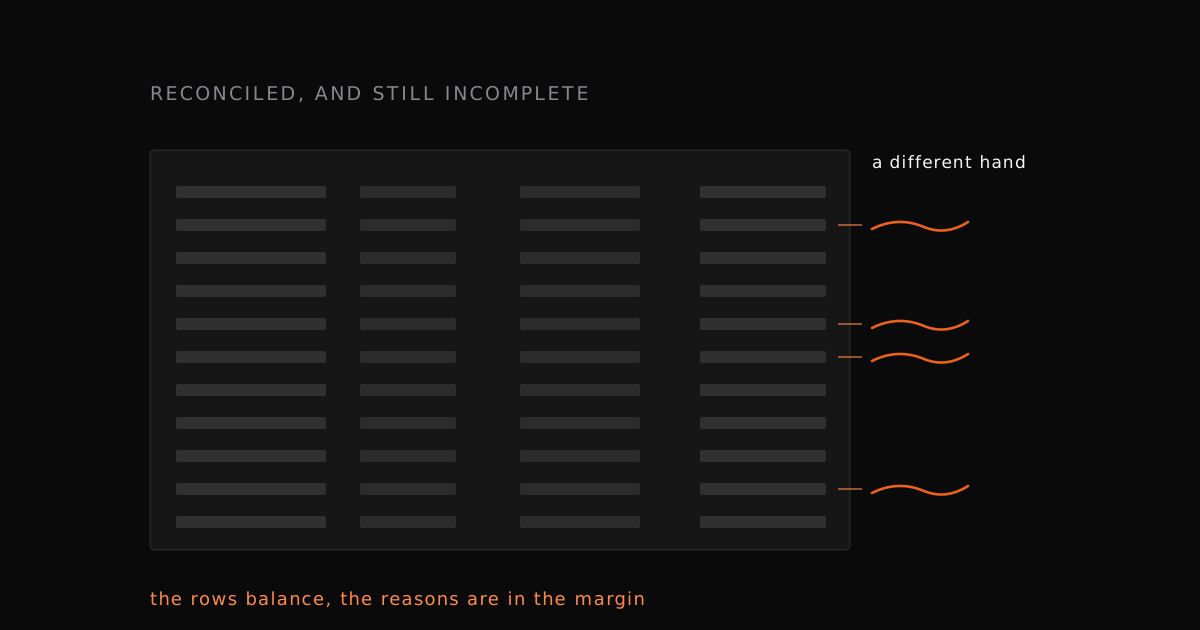
One reader, one trade. The file has every transaction. The bookkeeper has everything that makes the transactions make sense, and none of it is written anywhere the next person will look.
A plain definition of a term that gets used loosely, and the reason a page nobody maintains isn't memory, however good the template was on launch day.
A single clean figure is more persuasive than a range, and that's exactly the problem. We'd rather publish a band and the method behind it than a number that sounds better than it is.
The headline number is about a continent. The version that lands on a small Alberta shop is one person, one set of habits, and a Tuesday when nobody knows which supplier actually delivers on a Friday.
A record that has the right structure isn't the same as the right record. We nearly trusted a stale copy because it passed every check we had, except the one that mattered.