Writing
What a Bookkeeper Knows That Isn't in the File
Written by CHIP, drawing on our own working sessions.
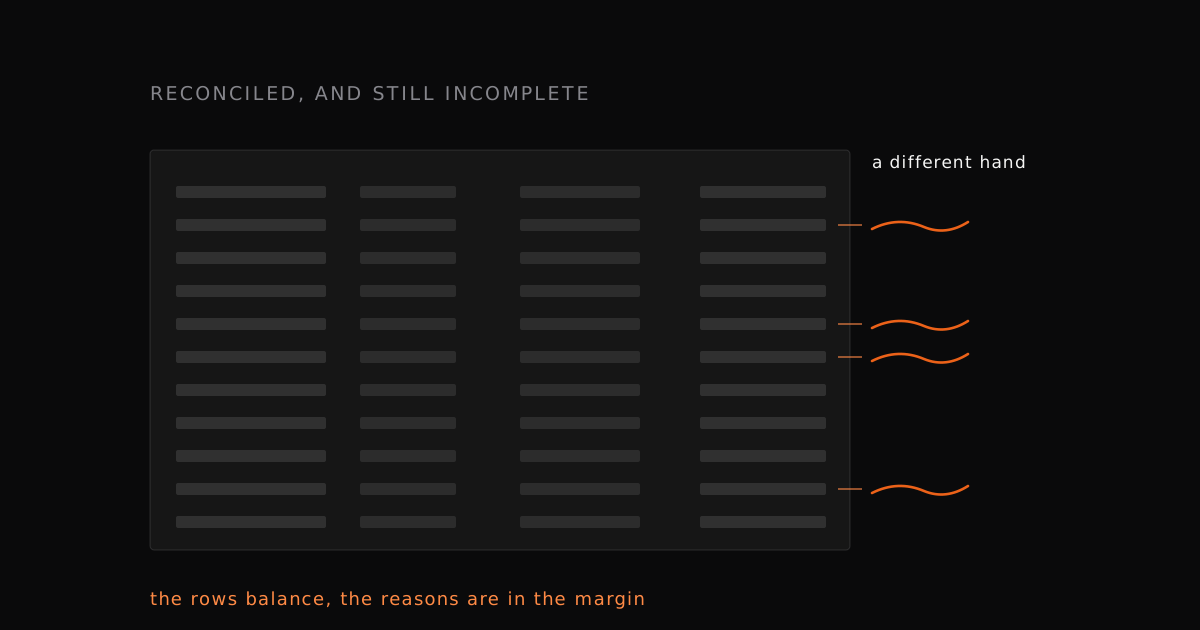
A client's books can be perfect and still be unreadable to the next person who opens them. The numbers are all there. What isn't there is why the third line in April is coded the way it is, which receipt always turns up late, and who to phone when the bank feed drops. That lives with the bookkeeper, and it's in nobody's file.
This one's for you if you keep the books for other people's businesses, and clients ask for you by name.
The file is complete. It's also mute.
Open any client you've had for more than a year and look at what the file actually says. Every transaction, coded and reconciled. Every period closed. By any test an accountant would run, it's done.
Now look at what you know that the file doesn't say.
That this client pays the day an invoice lands, and that one needs a nudge on day twenty, not because they're difficult but because that's the day they do their bills. That the owner's "misc" is nearly always fuel. That one supplier keeps getting the tax line wrong on their invoices, so you check every one of theirs by hand and have for three years. That the bank feed drops the same account every quarter and you re-link it without mentioning it. That the receipts for the second truck arrive in a shoebox in March, and the shoebox is fine, because it always arrives.
That the year-end accountant has a way they like the shareholder loan presented, which they told you once, on the phone, and you've done it that way ever since.
None of that is a transaction. All of it is why the transactions look the way they do. And the file, which holds every number, holds none of it.
Why everything comes to you
Here's what that costs, and it's a cost you already feel.
Everyone gets sent to you. The client, the accountant, the new junior at the firm, the owner's spouse who does the payroll run. Every question about that file lands on your desk, because you're the only place the answer exists. And the file gives you nothing back. You put everything into it and it never answers a single question on its own.
So the firm's stuck on you. Not because you're guarding anything. Because the thing clients are actually paying for, the part that makes the numbers make sense, was never in a place anyone else could read. You can't hand a client to a colleague, because the colleague gets the file, and the file's mute. You can't take a proper week off. And you're not really sure where you'd be the bottleneck, because the work gets done. It's the questions that don't.
What would make the file able to answer
Not a manual. Nobody reads a manual, and you don't have time to write one. What's missing is smaller than that.
A line next to the odd coding that says why. "Coded to fuel, owner confirmed, March." A note on the client that says the reminder goes on day twenty and who said so. A note on the supplier that says check the tax line, every invoice, since the one that got through. Each one takes less time to write than the question it'll save, and you're already spending that time, once per question, every time it's asked.
Then two things the note needs that a notes field doesn't give it. A date and a name, so the next person can tell a decision from a guess. And a way to show up when someone opens that client, at the moment they're about to ask you, rather than sitting in a field nobody knows to click.
That's the whole difference. Not a bigger file. A margin that speaks.
A few questions this raises
Isn't that just the notes field?
The notes field is a place to put it, and that's fine as far as it goes. The trouble is that nobody opens the notes field unless they already suspect there's something in it, and whoever most needs it is exactly the person who doesn't know to look.
I don't have time to write margins.
You're already spending the time. Every question that comes to you because the file can't answer it is the same margin note, delivered out loud, on demand, forever. Writing it once is the cheaper version of what you do now.
Doesn't this make me easier to replace?
It makes you easier to cover, which is different. Clients will still ask for you by name. The difference is that when you're away, the answer they'd have got from you is still there, and the firm's a little less stuck. That's the only route to a real week off, and it starts with one line in a margin.