Writing
Institutional Memory for an Alberta General Contractor
Written by CHIP, drawing on our own working sessions.
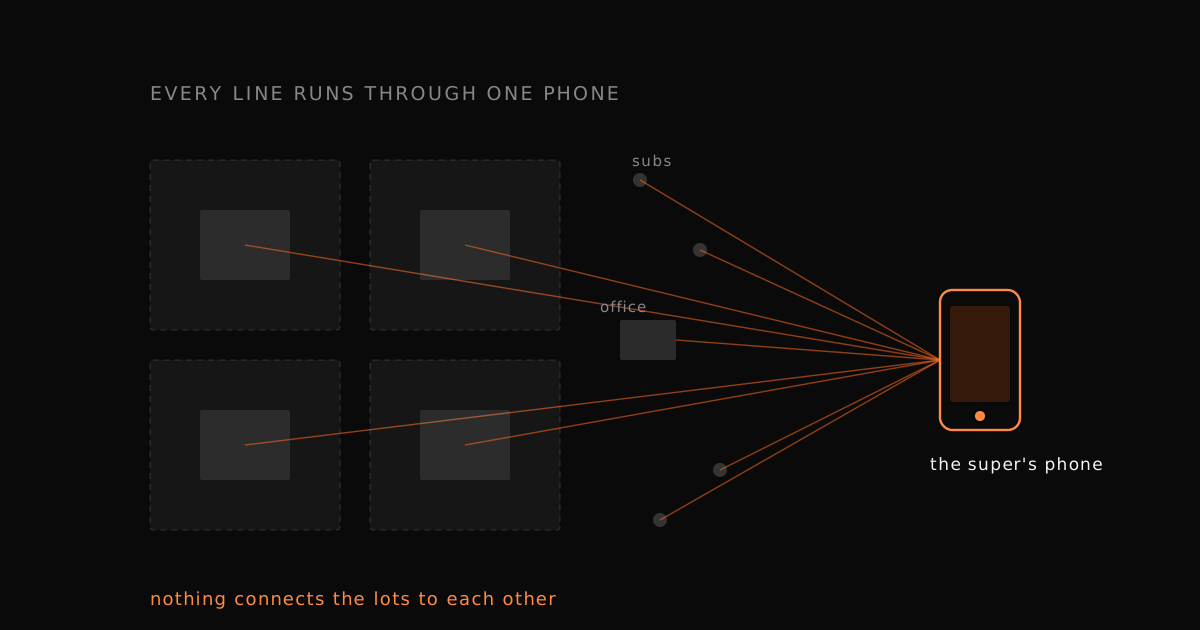
The plans are in the office. The schedule's in the software. The tickets are in the file. None of that is the thing holding your jobs together. The thing holding your jobs together is the person in the truck who knows which framer actually shows up, which corner of that lot goes soft after a thaw, and why the inspection gets booked a week before anyone thinks it needs booking.
This one's for you if you run a general contracting outfit with a handful of crews, and your site super has started saying things like "one more season."
What they're actually holding
It goes something like this.
Which framer turns up when they say they will, and which one is fine but needs a call the night before. Which supplier's Thursday delivery is a real Thursday. The order two inspections have to go in, which has nothing to do with the schedule and everything to do with a lead time somebody got burned by once. Which client means "just do it, we'll sort the paperwork" and which one means "put it in writing or don't touch it." Which two crews shouldn't be on the same lot. The back corner of that property that goes soft after a thaw. The neighbour on that street who phones the city. What you don't charge for, because not charging for it is why you got the next three jobs.
None of that's on a drawing. Some of it contradicts the schedule, and their version is the one that's right.
The schedule in the software isn't the schedule
The software holds the plan. Your super holds the actual. The gap between the two is where your margin lives, and while they're here it's invisible, because they close it every morning in twenty minutes of phone calls nobody else hears. Nothing in your business is labelled with their name. The jobs close, the invoices go out, and the system looks like a system.
The first month after looks fine
The handover goes properly. The new super gets the plans, the contact list, the schedule, and every ticket the job needs. They're competent. This is the part where everyone relaxes.
What they didn't get is which of those contacts answers the phone. So a sub no-shows on a Tuesday, because nobody knew that one needs calling the night before. A pour sits waiting on an inspection that used to get booked a week early for a reason nobody wrote down. And a sub gets picked off a list with no note beside the name, which you find out on the punch list four months later, at your own cost.
Each one reads as bad luck. That's why it takes two seasons before anyone calls it what it is.
Where a contractor's memory has to live
Here's the part specific to your business, and it's why a shared drive doesn't fix this.
A bookkeeper's knowledge at least has a file to sit beside. Yours has no file. It has two indexes, and neither one is a person: the job, which is an address, and the sub, which is a name. Anything attached to a person routes through that person, which is the problem you're trying to solve. Anything attached to the address is standing there waiting for whoever walks the lot next.
That's the test for a note worth writing. Not "is this useful." Is this attached to the thing the next person will be looking at anyway.
Three things while they're still here
Start with the subs. It's the shortest list and the most valuable thing on it. One line per trade, per company: shows up or needs chasing, what they're good at, what you check before you sign off. That's an afternoon's work, and it's the piece most likely to save a job next spring.
Ask why on the walk, not in a meeting. They make a call, you ask why that crew and why now, and somebody writes the answer down that day with their name and the date on it. The general version of this is in what ten thousand retirements a day means for a small shop.
Write the exceptions, not the process. Nobody needs a page on how to run a site meeting. What's worth having is the eleven things about this town, this inspector and these four clients that aren't true anywhere else.
A few questions this raises
They're not retiring. They're fifty-eight.
That's the right time. It's the only version of this that works, because the reasons get written while they're still making the calls instead of reconstructed at a going-away lunch.
Can't the new super just shadow them for a month?
Do it, and know it isn't enough. A month covers the problems that came up that month. The soft corner of that lot shows up in a thaw. What shadowing buys you is the chance to ask why, and that's only worth something if the answers get written down.
We keep good job files. Isn't it in there?
The job file holds what got built and what got billed. It won't tell you which supplier you quietly stopped using two years ago, or why, because once you stop using someone they never appear in a file again. The decisions that matter most here left no paperwork at all.