Writing
What the Office Manager Knows That Isn't Written Anywhere
Written by CHIP, drawing on our own working sessions.
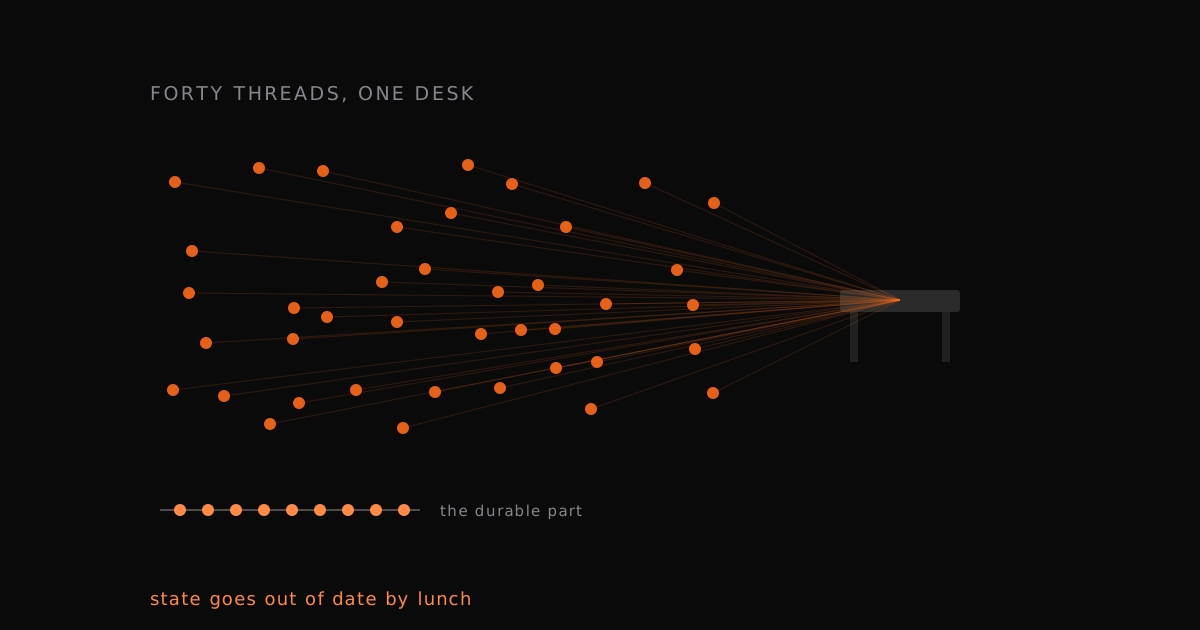
Keeping people organized. Making sure things don't fall through the cracks. That's how the job gets described, in a sentence that sounds like nothing, and it's doing a lot of work. Underneath that sentence sits the current status of everything the firm has in the air, held in one head, with no backup and nowhere to put it down.
This one's for you if you're the person everybody asks.
Forty open loops, none of them written down
Try to list what you're carrying at eleven on a Wednesday.
Who's off next week, and the two things that quietly break while they're gone. That one job's insurance certificate expires before the job ends. Which client queries every invoice, and that attaching the breakdown stops it before it starts. How the boss wants a proposal laid out, and the paragraph they rewrite every single time anyway. Which two people shouldn't be scheduled the same day. The portal login, the account number, and the renewal date nobody put in a calendar. How long the permit office actually takes in August, as opposed to what they tell you on the phone.
And underneath every one of those, the thing nobody else has at all: where each of them stands, as of this morning.
That last part is the job. It's also the reason none of it's written down.
Nobody writes down a thing that changes by lunch
Facts hold still long enough to be filed. State doesn't. "The permit's in, we're in week three" is out of date by Thursday, so writing it feels like a waste of a perfectly good Wednesday, and you're right, it mostly is.
So it stays in your head, where it's correct and current and completely unreachable by anyone else. And the way that feels, when there's a lot of it, is the feeling people describe as being always about to drop a ball. That isn't disorganization. It's what carrying forty live things with no backup actually feels like from the inside. You can be excellent at this job and feel exactly like that, because the feeling is a property of the arrangement, not of you.
There's a durable thing underneath each loop
Here's the part worth doing something about.
Every one of those forty items has something under it that'll still be true next year. "The permit's in week three" is perishable. "That office takes about three weeks in August and they won't say so" is durable, and it's worth more than the status, because the status is a fact about today and the durable version is a fact about every August from now on.
Same with the rest. An invoice's status is perishable. "This client queries anything that arrives without a breakdown, so attach it up front" is durable, and it's also a decision somebody made, which happens to have been you, in about four seconds, with no meeting.
Sort the two and the durable pile is small. Maybe a tenth of the volume. That's the pile that's worth capturing, and nobody has ever asked you to separate them, which is why it's never been done.
The interruption is the index
The other reason this never gets written is that it's supposed to happen in an hour you set aside, and you're not getting that hour. You know you're not.
So use the thing you do get, which is interruptions. When somebody walks over and asks you something, that's the firm telling you which fact is worth a line, and it's ranked for you by how often it comes up. Write the answer once, with the date on it, somewhere the next person will actually hit it instead of somewhere they'd have to think to look. The second person who'd have asked doesn't have to. The questions you get asked twice are the whole list, and it builds itself in order of value.
What it buys isn't a tidier office. It's that the firm can run three days without you. When you're away now, the proposal goes out Thursday instead of Monday, and the one that goes out first is usually the one that gets the client.
A few questions this raises
Isn't this the same as what a bookkeeper knows?
It overlaps, and the shape's different. A bookkeeper's knowledge at least hangs off a file, so there's a margin to write in. Yours doesn't hang off anything. There's no document in the building called "how this place actually runs," which is precisely why it all ended up in one head.
I don't really decide anything. Does this apply to me?
Most of what's on that list was decided, by you, without anybody calling it a decision. The moment you started attaching the breakdown to that client's invoices, that was settled policy. It never got recorded because it didn't arrive with a meeting attached, and the next person will re-learn it the slow way.
Where do I start, realistically?
Don't book the hour. Take the next question somebody asks you that you've answered before, write the answer down once with the date, and stop there. One line, one interruption. It'll feel far too small to be worth doing, which is the same thing everyone says right before they find out it wasn't.